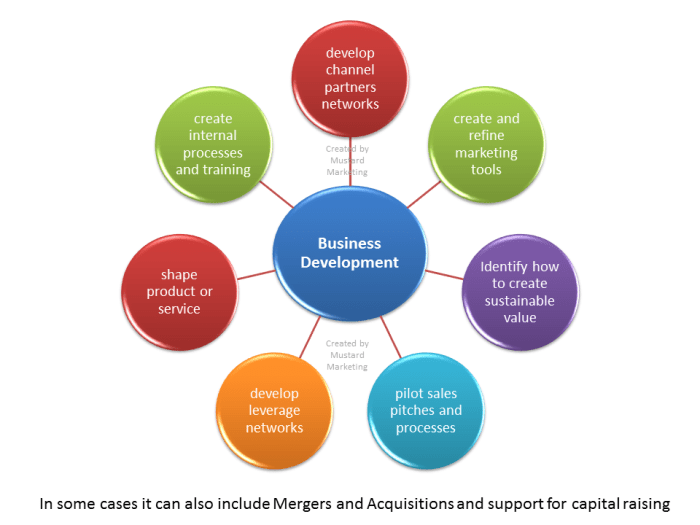
Mastering business development is crucial for managers seeking to propel their organizations towards success. This isn’t just about boosting sales; it’s a multifaceted skill set encompassing strategic planning, astute market analysis, and the cultivation of strong professional networks. This exploration delves into the core competencies managers need to not only identify opportunities but also to strategically capitalize on them, fostering sustainable growth and achieving ambitious organizational goals.
We will examine how managers can leverage financial acumen, ethical considerations, and effective coaching to navigate the complexities of the modern business landscape.
From understanding market trends and developing compelling marketing strategies to securing funding and building collaborative relationships, this guide provides a comprehensive framework for managers to hone their business development expertise. We’ll explore practical techniques, real-world examples, and actionable steps to empower managers to become driving forces of innovation and growth within their organizations.
Defining Business Development Skills for Managers
Business development, in the context of management, transcends simple sales or marketing. It encompasses a strategic, proactive approach to identifying and capitalizing on opportunities that foster sustainable growth and competitive advantage for the organization. Effective business development for managers involves a blend of analytical, interpersonal, and strategic skills, applied to achieve long-term organizational objectives.Managers with strong business development skills actively contribute to the organization’s overall success beyond their immediate team responsibilities.
They identify emerging market trends, develop innovative solutions, and build relationships that translate into tangible business outcomes. This differs significantly from individual contributor roles where the focus is often more narrowly defined within a specific task or project.
Key Differences Between Business Development Skills for Managers and Individual Contributors
Business development skills for managers are distinguished from those of individual contributors by their scope and strategic focus. Individual contributors typically focus on executing tasks within a defined area, while managers must leverage business development skills to shape the overall direction and success of their teams and the broader organization. Managers need a broader perspective, encompassing market analysis, strategic planning, and team leadership, while individual contributors might concentrate on specific sales, marketing, or product development activities.
For instance, a sales representative (individual contributor) focuses on closing deals, whereas a sales manager (manager) focuses on developing strategies to improve the overall sales performance of their team, potentially involving market research, competitor analysis, and team training.
Importance of Business Development Skills in Achieving Organizational Goals
Strong business development skills are crucial for achieving organizational goals because they directly impact revenue generation, market share expansion, and overall organizational growth. Managers who proactively identify and pursue new business opportunities, cultivate strong client relationships, and optimize existing business processes significantly contribute to the organization’s bottom line. These skills translate into increased profitability, enhanced brand reputation, and a more resilient and adaptable organization capable of navigating changing market conditions.
Consider a scenario where a manager identifies an untapped market segment; their ability to leverage business development skills can lead to the creation of new products or services, ultimately resulting in significant revenue growth for the company.
Essential Business Development Skills and Their Application in Managerial Contexts
The following table illustrates essential business development skills and their application across various managerial contexts:
| Business Development Skill | Marketing Manager Application | Sales Manager Application | Product Manager Application |
|---|---|---|---|
| Market Analysis & Research | Identifying emerging trends to inform marketing campaigns. | Understanding customer needs to tailor sales strategies. | Analyzing market demand to guide product development. |
| Strategic Planning & Forecasting | Developing long-term marketing strategies aligned with business goals. | Setting sales targets and forecasting future performance. | Creating product roadmaps and anticipating market changes. |
| Relationship Building & Networking | Cultivating relationships with key influencers and media outlets. | Building rapport with clients to foster loyalty and repeat business. | Collaborating with cross-functional teams to ensure product success. |
| Negotiation & Persuasion | Negotiating advertising contracts and securing sponsorships. | Negotiating deals with clients and closing sales. | Negotiating resources and priorities with stakeholders. |
| Innovation & Creativity | Developing innovative marketing campaigns that stand out from the competition. | Finding creative ways to reach new customers and increase sales. | Developing innovative product features and solutions. |
| Financial Acumen | Understanding marketing ROI and budget allocation. | Analyzing sales data and managing sales budgets. | Understanding product costs and pricing strategies. |
Strategic Planning and Market Analysis for Business Development
Effective strategic planning and insightful market analysis are cornerstones of successful business development. Managers who master these skills can identify lucrative opportunities, allocate resources efficiently, and ultimately drive significant growth for their organizations. This section explores how managers can leverage these tools to achieve their business development goals.
Market analysis provides the crucial foundation for identifying new business opportunities. By systematically examining market trends, competitive landscapes, and customer needs, managers can pinpoint areas ripe for expansion or innovation. This data-driven approach minimizes risk and maximizes the chances of success in new ventures.
Utilizing Market Analysis to Identify New Business Opportunities
Managers can utilize market analysis in several ways to unearth new business opportunities. Firstly, analyzing market trends reveals emerging consumer preferences, technological advancements, and shifts in regulatory environments. This information can illuminate unmet needs or potential gaps in existing offerings. Secondly, competitive analysis allows managers to understand their competitors’ strengths and weaknesses, identifying areas where differentiation and innovation can create a competitive advantage.
Finally, customer segmentation and profiling helps to define specific target markets, enabling the development of tailored products and services to meet the unique needs of different customer groups. For example, a company specializing in sustainable clothing might analyze the growing demand for eco-friendly fashion among younger demographics to develop a new line of sustainable apparel targeting millennials and Gen Z.
Developing a Strategic Plan that Integrates Business Development Objectives
Developing a strategic plan that effectively integrates business development objectives requires a structured approach. The process typically begins with a thorough assessment of the current business situation, including market position, competitive landscape, and internal capabilities. This assessment informs the definition of clear, measurable, achievable, relevant, and time-bound (SMART) business development goals. Next, specific strategies and tactics are developed to achieve these goals.
These strategies might include market penetration, product development, market development, or diversification. Finally, the plan should include a detailed implementation timeline, resource allocation, and key performance indicators (KPIs) to track progress and measure success. A well-structured plan ensures alignment across departments and provides a roadmap for consistent, focused growth.
Examples of Successful Strategic Plans Implemented by Managers to Drive Business Growth
Many companies have successfully implemented strategic plans to drive significant business growth. For instance, Netflix’s strategic shift from DVD rentals to streaming video on demand transformed the company into a global entertainment giant. This involved significant investment in technology, content acquisition, and international expansion. Similarly, Apple’s consistent focus on innovation, design, and user experience has fueled its remarkable growth and brand loyalty.
These examples highlight the importance of adaptability, continuous improvement, and a long-term vision in successful strategic planning.
Conducting a Competitive Analysis to Inform Business Development Strategies
A step-by-step guide for conducting a competitive analysis includes:
- Identify Key Competitors: Define the direct and indirect competitors within the target market.
- Gather Information: Collect data on competitors’ products, services, pricing, marketing strategies, and customer reviews through market research reports, company websites, and social media analysis.
- Analyze Strengths and Weaknesses: Evaluate each competitor’s strengths and weaknesses in terms of product quality, brand reputation, market share, and financial performance.
- Identify Opportunities and Threats: Assess the opportunities and threats presented by each competitor, considering factors such as potential market disruptions and emerging technologies.
- Develop Competitive Strategies: Formulate strategies to leverage competitive advantages and mitigate threats, such as focusing on product differentiation, cost leadership, or niche market specialization.
A robust competitive analysis provides valuable insights into the competitive landscape, enabling managers to make informed decisions about product development, pricing, marketing, and overall business development strategies. By understanding their competitors’ actions and anticipating future trends, managers can position their businesses for sustainable growth and market leadership.
Networking and Relationship Building for Business Development
Effective networking and relationship building are crucial for successful business development. Strong relationships foster trust, open communication, and collaborative opportunities, leading to increased sales, strategic partnerships, and overall business growth. Managers who cultivate a robust professional network are better positioned to identify new markets, secure funding, and navigate competitive landscapes.Building and maintaining professional relationships requires a proactive and strategic approach.
It’s not simply about collecting business cards; it’s about cultivating genuine connections based on mutual respect and shared value. This involves consistent effort, thoughtful communication, and a willingness to provide value to others. A strong network can provide access to invaluable information, expertise, and resources, significantly accelerating business development initiatives.
Strategies for Building and Maintaining Professional Relationships
Successful networking involves more than just attending events; it’s about strategically building relationships that benefit both parties. Managers should focus on quality over quantity, prioritizing meaningful interactions over superficial connections. This includes actively listening to others, understanding their needs, and offering assistance where possible. Regular follow-up is key to maintaining these relationships. A simple email or phone call after a meeting can significantly strengthen the connection.
Managers should also strive to be reliable and trustworthy, consistently delivering on their commitments. This builds credibility and fosters long-term relationships.
Examples of Successful Networking Techniques
One effective technique is to participate in industry events, conferences, and workshops. Actively engaging in discussions, presenting insights, and exchanging business cards are valuable steps. Another successful strategy is joining relevant professional organizations. This provides opportunities to connect with like-minded individuals, attend industry-specific events, and access valuable resources. Managers can also leverage online platforms like LinkedIn to connect with professionals in their field, participate in relevant groups, and share insightful content.
Finally, informational interviews, where managers request brief meetings with individuals in their desired field to learn about their experiences, can be incredibly beneficial for building relationships and gaining valuable insights.
Key Characteristics of Effective Business Networking
Effective business networking is characterized by authenticity, active listening, and a genuine interest in others. Managers should avoid a purely transactional approach, focusing instead on building genuine rapport. They should be proactive in seeking out opportunities to connect with others, and always be prepared to offer value in return. Strong communication skills are essential, enabling managers to articulate their business needs and effectively convey their value proposition.
Patience and persistence are also crucial, as building strong relationships takes time and effort. Finally, reciprocity is key – successful networking involves a two-way exchange of value and support.
Actionable Steps for Building Strong Relationships with Key Stakeholders
To build strong relationships with key stakeholders, managers should first identify their key stakeholders—clients, investors, partners, employees, and community members. Next, they should develop a plan for engaging with each stakeholder group, tailoring their approach to the specific needs and interests of each group. This may involve regular communication, personalized interactions, and providing value-added services. Managers should proactively seek feedback and actively listen to concerns, showing a genuine interest in building trust and fostering long-term partnerships.
Regular meetings, both formal and informal, can help maintain strong relationships and address any challenges promptly. Finally, demonstrating appreciation and recognition for the contributions of key stakeholders is vital for nurturing positive and productive relationships.
Sales and Marketing Strategies for Business Development
Effective sales and marketing strategies are crucial for driving business growth and achieving business development goals. A well-integrated approach aligns sales and marketing efforts to create a cohesive and powerful engine for expanding market share and increasing revenue. This section explores various sales strategies, the supportive role of marketing, and the design and implementation of a targeted marketing campaign, culminating in examples of successful strategies.Different sales strategies are employed depending on the business context, target market, and product or service being offered.
Understanding these nuances is key to optimizing sales performance.
Comparison of Sales Strategies
Several key sales strategies exist, each with its strengths and weaknesses. For example, a
- direct sales* approach involves direct interaction with potential clients, ideal for high-value, complex products or services requiring personalized demonstrations. In contrast,
- inbound sales* focuses on attracting customers through content marketing and lead generation, suitable for businesses with a larger target audience and a scalable sales process.
- Outbound sales*, on the other hand, involves proactively reaching out to potential clients through cold calling or email marketing, often effective for reaching a wider audience but requiring a robust lead qualification process. Finally,
- consultative selling* emphasizes building relationships and understanding client needs before proposing solutions, effective for businesses selling complex or customized solutions. The choice depends heavily on factors like budget, target market, and product complexity.
The Role of Marketing in Supporting Business Development
Marketing plays a pivotal role in supporting business development by generating leads, building brand awareness, and nurturing customer relationships. Effective marketing campaigns attract potential clients, educate them about the value proposition, and ultimately drive sales. This support manifests in various ways, including market research to identify target audiences, content marketing to educate potential clients, and brand building to establish credibility and trust.
Moreover, marketing provides crucial data and insights into customer behavior, preferences, and market trends, which inform sales strategies and product development. For instance, a strong social media presence can significantly improve brand visibility and lead generation, directly impacting sales performance.
Example Marketing Campaign: Targeting Small Businesses
Let’s design a marketing campaign targeting small businesses needing efficient project management software. Objective: Increase trial sign-ups by 25% within three months. Target Audience: Small businesses (10-50 employees) in the service industry. Implementation:
- Content Marketing: Create blog posts and case studies showcasing how the software improves project efficiency and reduces costs for similar businesses.
- Social Media Marketing: Run targeted ads on platforms like LinkedIn and Facebook, highlighting the software’s key features and benefits.
- Email Marketing: Develop a nurturing email sequence that guides prospects through the sales funnel, providing valuable content and offering a free trial.
- Search Engine Optimization (): Optimize website content and landing pages for relevant s to improve organic search rankings.
- Partnerships: Collaborate with complementary businesses (e.g., marketing agencies) to reach a wider audience.
Examples of Effective Sales and Marketing Strategies
Several companies have successfully used integrated sales and marketing strategies to achieve significant business growth. For example, Salesforce’s consistent focus on content marketing, thought leadership, and customer relationship management (CRM) has propelled its growth into a global leader in CRM software. Similarly, HubSpot’s inbound marketing strategy, emphasizing valuable content and lead nurturing, has established it as a prominent player in the marketing automation space.
These companies demonstrate the power of a well-aligned sales and marketing approach in achieving sustainable business growth. Their success highlights the importance of understanding the customer journey and providing value at each stage.
Business Development and Financial Management
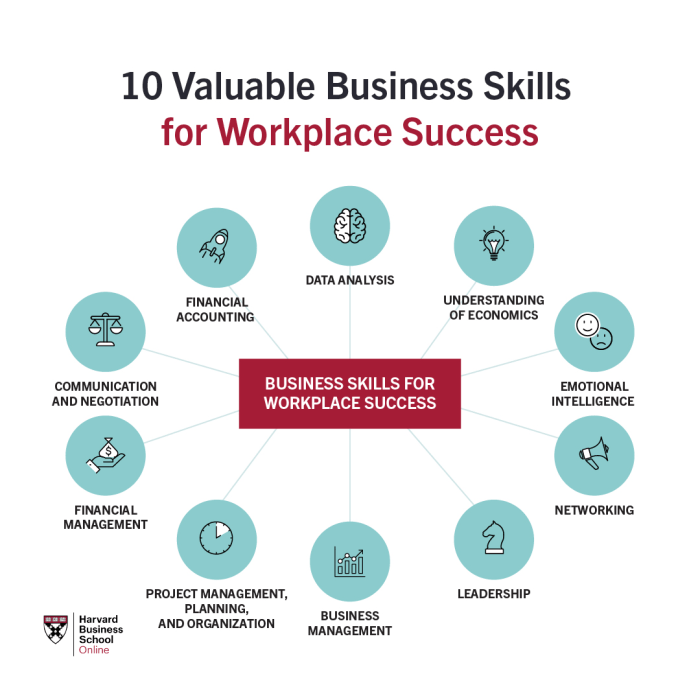
Effective business development hinges on a strong understanding of financial implications. Managers must be adept at using financial data to guide strategic decisions, secure necessary funding, and implement successful financial strategies to maximize returns on investment. This section explores the crucial intersection of business development and financial management.
Managers can leverage financial data to make informed business development decisions by analyzing key performance indicators (KPIs). This includes assessing profitability, market share, customer acquisition costs, and return on investment (ROI) for existing and potential projects. By tracking these metrics, managers can identify areas for improvement, optimize resource allocation, and make data-driven choices that enhance the overall success of business development initiatives.
For example, analyzing customer lifetime value (CLTV) can inform decisions about customer acquisition strategies and resource allocation to high-value customer segments.
Securing Funding for Business Development Projects
Securing funding involves a multifaceted process that begins with a compelling business plan outlining the project’s objectives, market analysis, financial projections, and risk mitigation strategies. This plan should clearly articulate the need for funding, the proposed use of funds, and the expected return on investment. Funding sources can range from internal company resources and retained earnings to external sources like bank loans, venture capital, angel investors, and government grants.
The choice of funding source depends on factors such as the project’s size, risk profile, and the company’s financial position. A strong presentation to potential investors, highlighting the project’s potential for growth and profitability, is critical to securing funding.
Examples of Successful Financial Strategies
Successful financial strategies often involve a combination of approaches tailored to the specific business development initiative. One example is the use of break-even analysis to determine the sales volume needed to cover costs and achieve profitability. Another is employing discounted cash flow (DCF) analysis to evaluate the long-term profitability of a project by considering the time value of money.
Companies might also utilize strategic partnerships to leverage resources and reduce financial risk, or explore creative financing options such as revenue-based financing to manage cash flow effectively. For instance, a company launching a new product might secure pre-orders to secure initial funding and demonstrate market demand, reducing the reliance on traditional loans.
Creating a Financial Model to Project ROI
A financial model projects the expected financial performance of a business development project over a defined period. This involves forecasting revenue, expenses, and cash flow based on realistic assumptions about market conditions, sales volume, and pricing strategies. The model should include key financial statements such as a projected income statement, balance sheet, and cash flow statement. By comparing the projected returns with the initial investment, the ROI can be calculated.
For example, a model might project a 20% ROI over three years for a new marketing campaign based on projected increases in sales and market share. The formula for calculating ROI is:
ROI = (Net Profit / Cost of Investment) x 100%
. Sensitivity analysis, which involves varying key assumptions to assess the impact on the projected ROI, is crucial for risk management.
Business Development, Ethics, and Coaching
Business development, while focused on growth and profitability, must always operate within a strong ethical framework. Ignoring ethical considerations can lead to reputational damage, legal repercussions, and ultimately, the failure of the business. Equally crucial is the role of coaching in honing the business development skills of managers, ensuring they can navigate the complexities of the market ethically and effectively.Ethical considerations are paramount in all aspects of business development.
They guide decision-making, shaping the relationships built and the strategies employed. A strong ethical compass ensures sustainable growth and fosters trust with stakeholders. Effective coaching can significantly improve a manager’s ability to integrate ethical considerations into their daily work.
Ethical Considerations in Business Development
Maintaining ethical standards requires a proactive approach. This involves adhering to legal regulations, fostering transparency in all dealings, and prioritizing fairness and integrity in interactions with clients, partners, and employees. Examples include avoiding misleading advertising, ensuring fair competition, and protecting confidential information. A commitment to ethical practices builds a strong reputation and fosters long-term success. Conversely, unethical behavior can severely damage a company’s image and erode trust.
The Role of Business Coaching in Developing Managerial Business Development Skills
Business coaching provides managers with the tools and strategies to improve their business development capabilities. Coaching focuses on individual development, helping managers identify strengths and weaknesses, set goals, and create action plans for improvement. A coach can provide guidance on effective communication, negotiation, and strategic planning, all crucial components of successful business development. Moreover, coaching can help managers develop self-awareness, leading to better decision-making and a more ethical approach to business.
Mentorship programs, for example, can pair experienced professionals with those seeking to enhance their business development skills. This pairing facilitates knowledge transfer and the modeling of ethical conduct.
Examples of Ethical Dilemmas in Business Development and Their Navigation
Ethical dilemmas frequently arise in business development. For instance, a manager might face pressure to cut corners to meet sales targets, potentially compromising product quality or ethical sourcing. Another scenario could involve a conflict of interest, such as a manager having a personal relationship with a potential client that could influence decision-making. Navigating these situations requires careful consideration of all stakeholders, a commitment to transparency, and a willingness to prioritize ethical principles over short-term gains.
Seeking advice from an ethical counsel or mentor is crucial in these scenarios. A robust compliance program within the company can provide clear guidelines and support for navigating such dilemmas.
A Code of Conduct for Business Development Professionals
A strong code of conduct is essential for guiding ethical behavior in business development. This code should emphasize:
- Integrity: Maintaining honesty and transparency in all interactions.
- Fairness: Treating all stakeholders equitably and avoiding discriminatory practices.
- Confidentiality: Protecting sensitive information and respecting intellectual property rights.
- Compliance: Adhering to all relevant laws and regulations.
- Accountability: Taking responsibility for actions and decisions.
- Respect: Valuing diversity and fostering a culture of mutual respect.
This code should be widely disseminated and regularly reviewed to ensure its continued relevance and effectiveness. Regular training and education on ethical issues are also critical for ensuring compliance and promoting a culture of ethical conduct.
Business Models, Strategies, Loans, and Travel
Effective business development requires a multifaceted approach, encompassing not only sales and marketing but also a deep understanding of business models, strategic planning, financing options, and efficient travel management. These elements work in concert to drive sustainable growth and achieve long-term objectives. A well-defined strategy, coupled with smart financial decisions and streamlined travel processes, significantly enhances a manager’s ability to expand their business’s reach and impact.Different business models offer diverse approaches to generating revenue and achieving profitability.
Understanding these models and their inherent strengths and weaknesses is crucial for choosing the right path for a specific business and its development goals. Similarly, a robust business strategy provides a roadmap for navigating the complexities of the market, ensuring that resources are allocated effectively to maximize return on investment. Access to appropriate financing, whether through loans or other avenues, plays a vital role in supporting expansion and innovation, while efficient business travel management optimizes productivity and minimizes costs associated with travel.
Business Model Comparison
Several prominent business models exist, each with its own implications for business development. For instance, a subscription-based model offers recurring revenue streams, fostering predictability and stability. However, it often requires a large initial customer base and effective customer retention strategies. In contrast, a freemium model attracts a wider audience with a free basic service, then monetizes a subset of users through premium features.
This model can be highly scalable but relies heavily on effective conversion rates from free to paid users. Finally, a transactional model focuses on individual sales, offering flexibility but demanding consistent marketing and sales efforts to drive ongoing revenue. The choice of model significantly impacts the overall business development strategy and resource allocation.
Developing a Robust Business Strategy
A successful business strategy is more than just a plan; it’s a dynamic roadmap for growth. It begins with a thorough market analysis to identify target audiences, competitive landscapes, and emerging trends. This analysis informs the development of clear, measurable, achievable, relevant, and time-bound (SMART) goals. The strategy should then Artikel specific tactics for achieving those goals, encompassing marketing, sales, product development, and operational improvements.
Regular monitoring and evaluation are essential to ensure the strategy remains aligned with evolving market conditions and business objectives. A well-defined strategy guides resource allocation, prioritizes initiatives, and provides a framework for decision-making, maximizing the impact of business development efforts. For example, a company aiming for international expansion would need a distinct strategy compared to one focused solely on domestic market penetration.
Business Loan Options and Selection
Securing appropriate financing is often critical for business development initiatives. Several types of business loans are available, each with its own terms and conditions. These include term loans, which provide a fixed amount of capital over a specified period; lines of credit, which offer flexible access to funds up to a pre-approved limit; and SBA loans, which are government-backed loans offering favorable terms to small businesses.
The choice of loan depends on several factors, including the business’s financial health, the purpose of the loan, and the repayment capacity. Careful consideration of interest rates, fees, and repayment schedules is crucial to selecting the most suitable financing option. A thorough understanding of the loan application process and the ability to present a strong business plan are vital for securing approval.
Effective Business Travel Management
Efficient business travel management is crucial for maximizing the productivity and minimizing the costs associated with business development activities. Well-planned travel ensures that time is used effectively for meetings, networking, and other crucial business development tasks. Effective management also helps reduce travel-related expenses, including airfare, accommodation, and transportation.
- Book flights and accommodations well in advance to secure better rates.
- Utilize loyalty programs and corporate travel discounts.
- Optimize itineraries to minimize travel time and maximize productivity.
- Utilize technology to manage travel arrangements and track expenses.
- Establish clear travel policies to ensure consistency and control.
Ultimately, cultivating strong business development skills is not merely advantageous for managers; it’s essential for organizational success. By mastering strategic planning, networking, financial management, and ethical practices, managers can transform their organizations, fostering innovation, driving growth, and securing a competitive edge. This comprehensive approach, blending analytical skills with interpersonal acumen, positions managers as pivotal figures in achieving ambitious business objectives and navigating the ever-evolving market dynamics.
The journey to becoming a proficient business development manager is a continuous process of learning, adapting, and refining one’s skills, ultimately contributing to a thriving and sustainable organization.
User Queries
What is the difference between business development and sales?
Business development focuses on long-term strategic growth, identifying new opportunities, and building relationships. Sales focuses on closing deals and generating immediate revenue. Business development often lays the groundwork for future sales.
How can managers measure the success of business development initiatives?
Success can be measured through various Key Performance Indicators (KPIs), including market share growth, lead generation, new customer acquisition, revenue increase, and return on investment (ROI) of specific projects.
What are some common pitfalls to avoid in business development?
Common pitfalls include neglecting market research, failing to build strong relationships, insufficiently allocating resources, and overlooking ethical considerations.
How can managers stay updated on industry trends and best practices in business development?
Managers can stay updated through industry publications, attending conferences and workshops, networking with peers, and leveraging online resources and professional development programs.