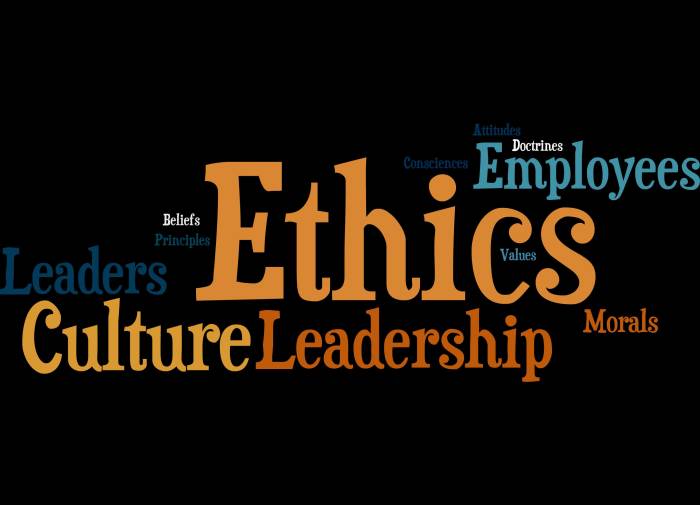
Building a thriving business isn’t just about profits; it’s about cultivating a workplace where integrity and ethical conduct are paramount. This journey explores the multifaceted aspects of creating an ethical business culture, from defining core principles and implementing practical frameworks to fostering ethical decision-making and promoting responsible leadership. We’ll delve into real-world examples, explore common challenges, and provide actionable strategies to ensure your business operates with honesty, transparency, and a commitment to doing what’s right.
This guide provides a comprehensive roadmap for establishing an ethical foundation within your organization, covering everything from developing a robust code of conduct to integrating ethical considerations into your business strategy and daily operations. We’ll examine the long-term benefits of ethical practices, including improved employee morale, enhanced brand reputation, and increased financial success, while also addressing potential conflicts and challenges that may arise along the way.
Defining Ethical Business Culture
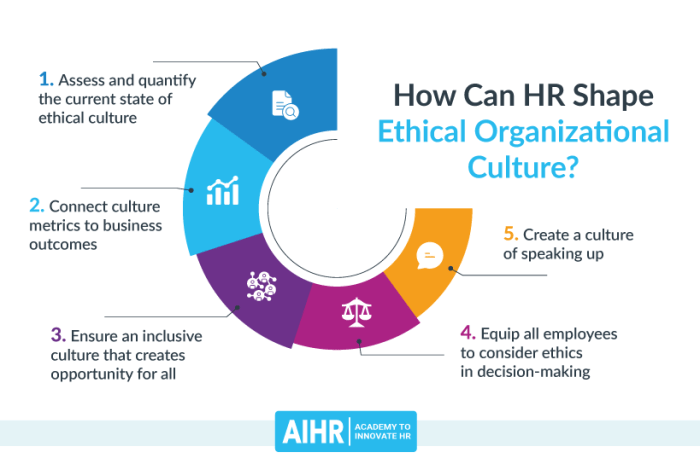
An ethical business culture is more than just a set of rules; it’s a deeply ingrained value system that guides every aspect of a company’s operations. It reflects the organization’s commitment to integrity, fairness, and responsibility in its dealings with employees, customers, suppliers, and the wider community. This culture is not simply a compliance program, but a fundamental aspect of the company’s identity and strategic direction.The core principles of an ethical business culture encompass several key areas.
Transparency in decision-making and operations is crucial, ensuring that all stakeholders have access to relevant information. Accountability for actions and decisions, at all levels of the organization, fosters a sense of responsibility and minimizes the risk of unethical behavior. Fairness and equity in treatment of employees, regardless of background or position, creates a positive and inclusive work environment.
Respect for the law and adherence to ethical standards, both internally and externally, builds trust and credibility. Finally, a commitment to social responsibility, considering the impact of business decisions on the environment and society, demonstrates a broader ethical perspective.
Benefits of Fostering an Ethical Workplace
A strong ethical culture yields significant benefits. Improved employee morale and engagement are often observed in ethical workplaces, as employees feel valued and respected. This leads to increased productivity and reduced employee turnover. Enhanced reputation and brand image are also significant advantages; customers are increasingly drawn to companies with a proven commitment to ethical practices. This translates into increased customer loyalty and stronger brand advocacy.
Reduced legal and regulatory risks are another key benefit, as a culture of ethics minimizes the likelihood of scandals and lawsuits. Furthermore, stronger relationships with stakeholders, including investors, suppliers, and communities, are fostered through ethical conduct, leading to greater trust and collaboration.
Examples of Companies with Strong Ethical Cultures
Patagonia, known for its commitment to environmental sustainability and fair labor practices, exemplifies a strong ethical culture. Their commitment extends beyond mere compliance, incorporating environmental responsibility into their product design and supply chain. Similarly, Unilever, through its Sustainable Living Plan, demonstrates a commitment to ethical sourcing, reducing environmental impact, and improving the health and well-being of consumers. These companies actively integrate ethical considerations into their core business strategies, not as an afterthought but as a defining characteristic.
Their practices include rigorous ethical audits, transparent supply chains, and active engagement with stakeholders to address ethical concerns.
Different Approaches to Building Ethical Cultures
Various approaches exist for building ethical cultures. Some companies focus on a rules-based approach, establishing detailed codes of conduct and implementing strict compliance programs. Others prioritize a values-based approach, emphasizing the importance of ethical principles and fostering a culture of integrity through leadership and training. A hybrid approach, combining both rules and values, is often the most effective.
Regardless of the specific approach, effective communication of ethical expectations, consistent enforcement of standards, and ongoing training and education are crucial for building and maintaining a strong ethical culture. Successful implementation requires leadership commitment, active employee involvement, and a continuous process of evaluation and improvement.
Implementing Ethical Practices
Building a robust ethical business culture requires more than simply stating intentions; it demands a practical framework for embedding ethical considerations into every aspect of operations. This involves creating clear guidelines, effectively communicating expectations, and establishing mechanisms for monitoring and enforcement. A well-defined process ensures ethical behavior isn’t just aspirational, but a lived reality within the organization.Implementing ethical practices is a multi-stage process that requires careful planning and consistent effort.
It’s not a one-time project, but rather an ongoing commitment to fostering a culture of integrity. This involves designing a comprehensive framework, developing a detailed code of conduct, and establishing effective communication and monitoring systems.
Ethical Guideline Implementation Framework
A practical framework for implementing ethical guidelines should be structured, measurable, achievable, relevant, and time-bound (SMART). It begins with identifying key ethical risks specific to the business, then developing clear guidelines to address these risks. These guidelines should be integrated into existing policies and procedures, and regular training should be provided to ensure understanding and compliance. Finally, a system for reporting and investigating ethical violations needs to be established, along with clear consequences for non-compliance.
This framework provides a roadmap for creating and maintaining an ethical work environment.
Creating an Ethical Code of Conduct
The creation of an ethical code of conduct involves several key steps. First, a cross-functional team should be assembled, representing diverse perspectives within the organization. This team will collaboratively define core ethical values and principles that align with the company’s mission and vision. Next, specific guidelines should be developed addressing potential ethical dilemmas, such as conflicts of interest, bribery, and data privacy.
The code should be written in clear, concise language, easily understood by all employees. Finally, the code should be reviewed and updated regularly to reflect changes in the business environment and legal landscape. For example, a technology company might need to frequently update its code to address emerging concerns related to artificial intelligence or data security.
Communicating Ethical Expectations
Effective communication is crucial for ensuring that ethical expectations are understood and embraced by all employees. This involves more than just distributing a code of conduct; it requires ongoing reinforcement through various channels. Regular training sessions, workshops, and online modules can help employees understand ethical principles and their practical application in their daily work. Leadership should actively model ethical behavior, creating a culture where ethical concerns are openly discussed and addressed.
Open forums, anonymous reporting mechanisms, and regular communication from leadership all contribute to a culture of transparency and accountability. For instance, regular town hall meetings where ethical dilemmas can be discussed can foster a sense of shared responsibility.
Monitoring and Enforcing Ethical Standards
Monitoring and enforcing ethical standards is an essential component of maintaining a culture of integrity. This involves establishing a system for reporting and investigating ethical violations, with clear processes for handling complaints. Regular audits and assessments can help identify areas of weakness and ensure compliance with ethical guidelines. Consequences for unethical behavior should be clearly defined and consistently enforced, demonstrating that the organization takes ethical violations seriously.
This might involve disciplinary actions, up to and including termination, depending on the severity of the infraction. Furthermore, a robust whistleblower protection policy is crucial to encourage reporting of unethical behavior without fear of retaliation. This protection ensures that employees feel comfortable raising concerns without jeopardizing their careers.
Fostering Ethical Decision-Making
Building a robust ethical business culture necessitates a clearly defined and consistently applied framework for ethical decision-making. This framework should guide employees at all levels, ensuring ethical considerations are prioritized in every business choice. It’s not enough to simply state ethical principles; a practical, accessible model is crucial for effective implementation.A well-structured ethical decision-making model provides a systematic approach, moving employees from identifying an ethical dilemma to making a justifiable decision.
This process helps prevent impulsive reactions and promotes thoughtful consideration of potential consequences. Furthermore, a clearly defined model offers a consistent framework, ensuring fairness and transparency across the organization.
A Decision-Making Model Prioritizing Ethical Considerations
The following model provides a step-by-step process for navigating ethical dilemmas:
1. Identify the ethical dilemma
Clearly define the situation and the conflicting values or principles involved. What are the competing interests? Who is affected?
2. Gather relevant information
Collect all necessary facts, considering all perspectives. Avoid making assumptions; seek diverse viewpoints.
3. Identify stakeholders
Determine who is affected by the decision and how. Consider the potential impact on employees, customers, shareholders, the community, and the environment.
4. Evaluate options
Explore all possible courses of action, considering the ethical implications of each. Consult relevant ethical guidelines, codes of conduct, and legal requirements.
5. Select the best course of action
Choose the option that best aligns with ethical principles and minimizes negative consequences. This often involves balancing competing interests and values.
6. Implement the decision
Execute the chosen course of action, ensuring transparency and accountability.
7. Evaluate the outcome
Assess the results of the decision, identifying lessons learned and areas for improvement in future ethical decision-making.
Examples of Ethical Dilemmas and Their Resolution
Ethical dilemmas are common in business. Consider these examples:* Conflict of Interest: A manager’s spouse owns a company that supplies materials to the manager’s firm. Resolution: The manager should disclose the conflict of interest to their superiors and recuse themselves from any decisions related to the supplier. Transparency and avoidance of preferential treatment are key.
Whistleblowing
An employee discovers illegal activity within the company. Resolution: The employee should carefully consider the potential risks and benefits of whistleblowing. They should document their findings thoroughly and may wish to consult with legal counsel before reporting the issue internally or externally. Internal reporting mechanisms should be accessible and protected.
Data Privacy
A company collects sensitive customer data. Resolution: The company must adhere to all relevant data privacy regulations (e.g., GDPR, CCPA) and implement robust security measures to protect customer information. Transparency with customers regarding data collection and usage practices is essential.
The Role of Leadership in Promoting Ethical Decision-Making
Leadership plays a crucial role in fostering ethical decision-making. Leaders must:* Lead by example: Demonstrate ethical behavior in all aspects of their work.
Communicate ethical expectations clearly
Establish a code of conduct and ensure it is understood and followed by all employees.
Provide ethical training
Equip employees with the skills and knowledge to navigate ethical dilemmas.
Create a culture of open communication
Encourage employees to report ethical concerns without fear of retaliation.
Hold employees accountable
Address ethical violations promptly and fairly.
Reward ethical behavior
Recognize and reward employees who demonstrate ethical conduct.
Ethical Decision-Making Training Program
An effective training program should include:* Interactive workshops: Facilitated discussions and case studies to help employees apply ethical decision-making models.
Role-playing exercises
Simulations of real-world ethical dilemmas to practice decision-making skills.
Ethical frameworks and codes of conduct
Education on relevant ethical principles and company policies.
Legal compliance training
Information on relevant laws and regulations.
Ongoing reinforcement
Regular updates and refresher courses to maintain ethical awareness.
Promoting Ethical Behavior
Building a truly ethical business culture requires more than just establishing policies; it demands proactive measures to encourage ethical conduct and address unethical actions swiftly and fairly. This involves creating an environment where ethical behavior is not only expected but actively rewarded, while unethical behavior faces clear consequences.Implementing effective strategies for promoting ethical behavior is crucial for maintaining trust, fostering a positive work environment, and ensuring long-term sustainability.
This section Artikels key approaches to achieve this.
Strategies for Encouraging Ethical Whistleblowing
A robust whistleblowing system is vital for uncovering and addressing unethical practices. This system must be easily accessible, confidential, and free from retaliation. Employees must be confident that reporting misconduct will not jeopardize their job security or professional standing. Effective strategies include establishing a dedicated, independent reporting channel (e.g., a hotline, online portal, or designated ethics officer), guaranteeing anonymity where possible, and providing clear guidelines on the reporting process.
Regular training sessions educating employees about the whistleblowing process and their rights are also essential. Furthermore, promptly investigating all reports and providing feedback to whistleblowers (while protecting their confidentiality) builds trust and encourages future reporting. A successful whistleblowing program fosters a culture of transparency and accountability.
Creating a Culture of Accountability for Unethical Behavior
Accountability is the cornerstone of ethical conduct. A culture of accountability means that individuals at all levels of the organization understand that unethical behavior will have consequences. This necessitates clear codes of conduct, consistent enforcement of those codes, and transparent disciplinary processes. Consequences should be proportionate to the severity of the offense and applied consistently across the organization, regardless of an individual’s position or seniority.
This sends a powerful message that ethical behavior is non-negotiable. Regular audits and reviews of ethical compliance are also necessary to identify potential weaknesses in the system and ensure consistent application of standards. For example, a company might implement a system of regular internal audits that focus specifically on ethical compliance. If violations are found, a clear and documented disciplinary process is followed, ensuring transparency and consistency in the application of consequences.
Rewarding Ethical Conduct and Addressing Unethical Actions
A comprehensive system should recognize and reward ethical behavior while addressing unethical actions promptly and fairly. This could include formal recognition programs, bonuses, promotions, or public acknowledgment of ethical conduct. Conversely, unethical behavior should be met with appropriate disciplinary action, ranging from verbal warnings to termination, depending on the severity of the offense. It is crucial that the rewards for ethical conduct are substantial enough to motivate employees and that the consequences for unethical actions are sufficient to deter future misconduct.
For instance, an annual “Ethics Award” recognizing employees who exemplify ethical behavior could be coupled with a clearly defined disciplinary process outlining consequences for violations of the company’s code of conduct, such as suspension or termination. This balanced approach reinforces the importance of ethical behavior throughout the organization.
Fostering Open Communication and Feedback Regarding Ethical Concerns
Open communication is crucial for identifying and addressing ethical concerns before they escalate into serious problems. This requires creating a safe space for employees to voice their concerns without fear of retribution. Regular ethics training, open forums, and anonymous feedback mechanisms can facilitate this. Managers should be trained to actively listen to and address employee concerns regarding ethical issues.
Furthermore, regular surveys and feedback sessions can help gauge employee perceptions of the organization’s ethical climate and identify areas for improvement. For example, implementing regular anonymous surveys on ethical concerns and conducting town hall meetings where employees can openly discuss ethical issues with senior management can create a more open and transparent environment. This fosters a culture where ethical considerations are proactively addressed and integrated into everyday decision-making.
The Role of Business Development in Ethical Culture
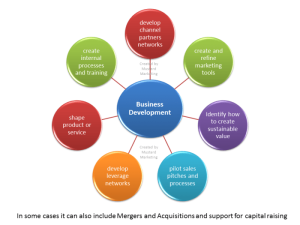
Business development, the process of expanding a company’s operations and increasing profitability, is inextricably linked to ethical considerations. A purely profit-driven approach, neglecting ethical implications, can lead to short-term gains at the expense of long-term sustainability and reputational damage. Conversely, integrating ethical principles into business development strategies fosters trust, enhances brand reputation, and ultimately contributes to sustainable growth.Business development strategies can be aligned with ethical principles by prioritizing stakeholder interests alongside profit maximization.
This involves considering the impact of business decisions on employees, customers, suppliers, communities, and the environment. For example, a company aiming for expansion might prioritize sustainable sourcing of materials, fair labor practices, and environmentally friendly production methods, thereby demonstrating a commitment to ethical operations and attracting socially conscious consumers and investors.
Ethical Considerations and Business Growth
Ethical considerations significantly impact business growth and sustainability. Companies with a strong ethical reputation attract and retain top talent, build stronger customer loyalty, and enjoy improved investor relations. This translates into increased market share, enhanced profitability, and long-term competitiveness. Conversely, unethical practices, such as environmental damage or exploitation of workers, can lead to boycotts, legal challenges, and reputational damage, hindering growth and jeopardizing the company’s future.
The well-documented scandals involving companies accused of unethical labor practices demonstrate the significant negative impact on long-term sustainability. For instance, a company discovered to be using child labor would likely face substantial financial and reputational repercussions, including loss of market share and legal penalties.
Potential Conflicts Between Business Development Goals and Ethical Responsibilities
Sometimes, business development goals might appear to conflict with ethical responsibilities. For example, the pressure to maximize profits quickly might tempt a company to cut corners on quality control or environmental protection measures. Similarly, aggressive expansion strategies might lead to unfair competition or exploitation of resources. The challenge lies in finding a balance between pursuing growth and upholding ethical standards.
This requires careful planning, robust risk assessment, and a commitment to ethical decision-making at all levels of the organization.
Integrating Ethical Considerations into Business Development
A comprehensive plan to integrate ethical considerations into all aspects of business development involves several key steps. First, establish a clear code of ethics that guides all business decisions. This code should be communicated clearly to all employees and stakeholders. Second, conduct regular ethical risk assessments to identify potential conflicts and develop mitigation strategies. Third, implement robust monitoring and reporting mechanisms to track the company’s ethical performance.
Finally, establish a culture of accountability where employees are encouraged to report unethical behavior without fear of reprisal. Regular ethical audits and employee training programs reinforce ethical awareness and ensure consistent ethical conduct across the organization. This integrated approach ensures that ethical considerations are not merely an afterthought but an integral part of the business development process, fostering sustainable growth and long-term success.
Business Ethics and its Impact
Ethical and unethical business practices have profound and lasting consequences, shaping not only a company’s financial performance and reputation but also its legal standing and societal impact. Understanding these long-term effects is crucial for building sustainable and successful businesses.The choices a company makes regarding its ethical conduct significantly influence its trajectory. Ethical practices foster trust, loyalty, and positive relationships with stakeholders, leading to long-term benefits.
Conversely, unethical practices, even if initially profitable, often lead to severe repercussions that far outweigh any short-term gains.
Long-Term Effects of Ethical and Unethical Business Practices
Ethical business practices cultivate a positive corporate culture, attracting and retaining top talent. Employees are more likely to be engaged and productive in an environment where they feel valued and respected, leading to increased efficiency and innovation. Conversely, unethical practices create a toxic work environment, leading to high employee turnover, decreased morale, and a loss of valuable expertise.
In the long run, ethical companies often enjoy stronger brand loyalty and a more resilient customer base. Unethical companies, on the other hand, may experience boycotts, negative publicity, and ultimately, market failure.
Financial Performance of Ethical and Unethical Companies
While short-term profits might seem achievable through unethical means, long-term financial performance consistently favors ethical companies. Studies have shown a positive correlation between strong ethical performance and financial success. Ethical companies tend to attract investors who prioritize long-term value and sustainability. They also often benefit from reduced legal and regulatory costs, avoiding penalties and fines associated with unethical behavior.
Conversely, unethical companies face higher risks of financial instability due to reputational damage, legal battles, and loss of investor confidence. For example, the Enron scandal resulted in significant financial losses for investors and employees, highlighting the devastating consequences of unethical accounting practices.
Examples of Reputational Damage from Ethical Failures
Numerous examples demonstrate the devastating impact of ethical failures on a company’s reputation. The Volkswagen emissions scandal, where the company intentionally cheated on emissions tests, resulted in billions of dollars in fines and a severe blow to its brand image. Similarly, the BP Deepwater Horizon oil spill led to widespread public outrage and long-lasting damage to the company’s reputation, affecting its stock price and customer loyalty.
These cases illustrate that even seemingly minor ethical lapses can have catastrophic consequences, significantly impacting a company’s value and long-term viability.
Legal and Regulatory Implications of Unethical Business Conduct
Unethical business conduct exposes companies to significant legal and regulatory risks. Violations of laws and regulations can result in substantial fines, legal battles, and even criminal charges. Companies found guilty of unethical practices may face sanctions, including restrictions on their operations, and reputational damage that can lead to decreased market share and profitability. Furthermore, unethical conduct can damage a company’s relationships with regulatory bodies, leading to increased scrutiny and stricter enforcement of regulations.
Compliance with ethical standards and relevant laws is therefore paramount for long-term business sustainability.
Business Coaching and Ethical Leadership
Business coaching plays a crucial role in cultivating ethical leadership within organizations. By providing personalized guidance and support, coaches help leaders identify and develop the essential skills and behaviors needed to promote a strong ethical culture. This involves not only understanding ethical frameworks but also translating those principles into practical actions and decisions. Effective coaching fosters self-awareness and accountability, key components of ethical leadership.Ethical leadership is not simply about adhering to rules; it’s about actively shaping the organization’s ethical climate.
It requires a leader to model ethical behavior, communicate ethical expectations clearly, and consistently hold themselves and others accountable to those standards. Developing these skills involves a multifaceted approach, incorporating both theoretical understanding and practical application.
Developing Ethical Leadership Skills
Developing ethical leadership skills within a company requires a strategic and ongoing commitment. This involves creating opportunities for leaders to learn and practice ethical decision-making in realistic scenarios. This might include workshops, simulations, case studies, and mentoring programs. Regular feedback and reflection are crucial to ensure that leaders are internalizing and applying the principles learned. A key aspect is fostering self-awareness, encouraging leaders to reflect on their own values and biases and how these might influence their decisions.
Finally, creating a culture of open communication and psychological safety enables leaders to seek advice and support when facing ethical dilemmas.
Examples of Effective Ethical Leadership
Consider a CEO who publicly acknowledges a company mistake, taking responsibility and implementing measures to prevent recurrence. This demonstrates transparency and accountability, key elements of ethical leadership. Another example is a manager who consistently prioritizes employee well-being, creating a supportive and inclusive work environment. This fosters trust and loyalty, vital for a strong ethical culture. Finally, a leader who consistently champions diversity and inclusion, actively seeking diverse perspectives and ensuring equitable treatment for all employees, showcases ethical leadership in action.
These leaders are not simply following rules; they are actively shaping their organizations’ ethical landscape.
Leadership Development Program Focused on Ethical Decision-Making
A successful leadership development program focused on ethical decision-making would incorporate several key elements. First, it should provide a solid foundation in ethical theories and frameworks, allowing leaders to understand different perspectives and approaches to ethical dilemmas. Next, it should include interactive workshops and simulations that present realistic ethical challenges, forcing leaders to apply their knowledge and consider the consequences of their decisions.
Role-playing scenarios can help leaders practice effective communication and conflict resolution skills in ethically charged situations. Finally, the program should emphasize ongoing mentorship and coaching, providing leaders with personalized support and guidance as they navigate ethical challenges in their day-to-day work. Regular follow-up and feedback sessions are crucial to ensure that learning is reinforced and applied consistently.
The program should also incorporate tools and resources that leaders can utilize to make ethical decisions in the future. This might include ethical decision-making frameworks, access to ethical resources, and opportunities for ongoing learning and development.
Business Loans and Ethical Considerations
Securing and providing business loans involves a complex interplay of financial needs and ethical responsibilities. Both lenders and borrowers face significant moral dilemmas that can impact the long-term health and sustainability of businesses and the wider economy. Transparency and fairness are paramount to maintaining trust and fostering a responsible lending environment.Ethical considerations in business lending extend beyond mere compliance with regulations.
They encompass a commitment to responsible lending practices that promote economic growth while minimizing the risk of financial exploitation or unsustainable debt burdens. Understanding these implications is crucial for all stakeholders involved.
Transparency and Fairness in Lending Practices
Transparency and fairness are cornerstones of ethical lending. Lenders should clearly disclose all loan terms, including interest rates, fees, and repayment schedules, in easily understandable language. They must avoid using deceptive or misleading marketing tactics to attract borrowers. Similarly, they should assess a borrower’s ability to repay the loan responsibly, avoiding predatory lending practices that target vulnerable individuals or businesses.
Fairness also necessitates equal access to credit for all qualified applicants, irrespective of background or other irrelevant factors. This involves actively combating biases that might lead to discriminatory lending practices.
Potential Ethical Risks Associated with Business Financing
Several ethical risks are associated with business financing. Predatory lending, where lenders exploit borrowers’ vulnerabilities to charge excessive interest rates or fees, is a significant concern. Another risk involves a lack of transparency in loan terms and conditions, leaving borrowers unaware of the true cost of borrowing. Conflicts of interest, where lenders prioritize personal gain over the best interests of their clients, can also lead to unethical practices.
Finally, inadequate due diligence by lenders can result in loans being granted to businesses that are unlikely to repay, leading to financial losses and potential business failures. These risks highlight the importance of robust ethical guidelines and responsible lending practices.
Strategies for Responsible Business Lending
Responsible business lending involves a multi-faceted approach. Thorough due diligence on potential borrowers is crucial, ensuring that their business plans are realistic and their financial capacity to repay the loan is sufficient. Clear and transparent loan agreements, devoid of hidden fees or confusing clauses, protect borrowers from exploitation. Regular communication with borrowers to monitor their progress and offer support, when necessary, demonstrates a commitment to their success.
Lenders should also have mechanisms in place to address complaints and grievances fairly and promptly. Furthermore, fostering a culture of ethical decision-making within lending institutions is crucial for ensuring that all lending practices align with ethical standards. This might involve implementing internal ethical guidelines, providing training to staff on ethical lending practices, and establishing an independent ethics review board.
Business Model and Ethical Frameworks
A business model is more than just a plan for making money; it’s the foundation upon which an entire organization is built. Integrating ethical considerations into this foundation is crucial for long-term success and sustainability. This involves not just adhering to legal requirements, but proactively embedding ethical principles into every aspect of the business’s operations, from sourcing materials to interacting with customers.A well-designed ethical business model considers the impact of its activities on all stakeholders – employees, customers, suppliers, the community, and the environment.
It anticipates potential ethical dilemmas and incorporates mechanisms to mitigate risks and promote responsible conduct. The process requires careful planning and a commitment to transparency and accountability.
Designing an Ethically Integrated Business Model
Designing an ethically integrated business model involves a systematic approach. First, identify the core values and principles that will guide the business. These should be clearly defined and communicated to all stakeholders. Next, analyze the entire value chain, identifying potential ethical risks at each stage. This includes assessing sourcing practices, production methods, marketing strategies, and distribution channels.
Finally, develop specific policies and procedures to address these risks and ensure ethical compliance. For example, a company committed to sustainability might choose to source materials from environmentally responsible suppliers, even if it costs slightly more. A commitment to fair labor practices might involve paying above-minimum wage and providing safe working conditions for all employees.
Assessing Ethical Implications of Different Business Models
Different business models present varying ethical challenges. For instance, a subscription-based model might raise concerns about data privacy and transparency if customer data is not handled responsibly. A freemium model, offering both free and paid services, might face ethical questions regarding the fairness and transparency of its pricing structure and the potential for manipulative marketing tactics. A business model relying heavily on advertising revenue may encounter ethical dilemmas related to targeted advertising and the potential for misleading or deceptive marketing practices.
A thorough ethical impact assessment should be conducted for each model, considering potential conflicts of interest, environmental impact, and social responsibility implications.
Comparing Ethical Aspects of Various Business Structures
The ethical considerations also vary depending on the legal structure of the business. Sole proprietorships, partnerships, limited liability companies (LLCs), and corporations all have different levels of accountability and transparency. For example, a sole proprietorship may have less stringent ethical oversight compared to a publicly traded corporation subject to greater regulatory scrutiny. The structure chosen will influence the ease of implementing ethical policies and procedures and the level of accountability to stakeholders.
Larger corporations often have dedicated ethics committees and compliance officers, while smaller businesses might rely on the owner’s personal ethical compass. This disparity underscores the importance of tailored ethical frameworks that fit the specific business structure.
Developing an Ethically Sound Business Model
Developing an ethically sound business model is an iterative process. It begins with defining the company’s mission and vision, explicitly incorporating ethical considerations. This is followed by a thorough risk assessment, identifying potential ethical pitfalls in the business operations. Then, the company needs to establish clear ethical guidelines and policies, coupled with effective monitoring and reporting mechanisms. Regular ethical audits and employee training are essential for maintaining ethical standards.
Finally, the company should proactively engage with stakeholders to solicit feedback and address any ethical concerns. This continuous feedback loop ensures the business model remains ethically sound and responsive to evolving societal expectations.
Business Strategy and Ethical Alignment
Creating a business strategy that genuinely reflects and prioritizes ethical values is not merely a matter of compliance; it’s a fundamental aspect of building a sustainable and successful enterprise. A well-defined ethical framework integrated into strategic planning provides a strong foundation for long-term growth and enhances stakeholder trust.Integrating ethical considerations into strategic planning ensures that the company’s actions are consistent with its values and principles, minimizing potential reputational damage and legal issues.
This proactive approach fosters a positive corporate image, attracts and retains talent, and strengthens relationships with customers and investors. It’s about aligning profit motives with a commitment to responsible business practices.
Identifying Potential Conflicts Between Business Objectives and Ethical Responsibilities
Conflicts can arise when short-term profit maximization clashes with long-term ethical considerations. For example, a company might face a decision between accepting a lucrative contract that involves questionable labor practices in a developing country or forgoing the opportunity to maintain its ethical commitment to fair wages and safe working conditions. Another example could involve choosing between using environmentally damaging but cost-effective materials or opting for sustainable alternatives that may increase production costs.
These conflicts require careful analysis and prioritization, often necessitating a trade-off between financial gains and ethical principles. A robust ethical framework helps companies navigate these complex scenarios by establishing clear guidelines and decision-making processes.
Measuring the Ethical Impact of Business Strategies
Measuring the ethical impact of business strategies requires a multifaceted approach. Key Performance Indicators (KPIs) should be developed to track ethical performance across various aspects of the business. This might involve monitoring employee satisfaction scores to gauge the effectiveness of ethical workplace policies, tracking the number of ethical violations reported, assessing customer feedback regarding ethical concerns, and measuring the environmental impact of the company’s operations through metrics like carbon emissions or waste reduction.
Regular ethical audits, independent assessments, and stakeholder feedback mechanisms are also crucial for obtaining a comprehensive understanding of the ethical impact of the company’s strategies. The data collected through these methods can inform future strategic decisions and demonstrate the company’s commitment to ethical business practices to stakeholders. For example, a company committed to sustainable practices could track its progress towards reducing its carbon footprint, demonstrating tangible results to investors and customers concerned about environmental responsibility.
Business Travel and Ethical Considerations
Business travel, while essential for many organizations, presents a unique set of ethical challenges. From managing expenses responsibly to ensuring safety and minimizing environmental impact, ethical considerations must be integrated into every aspect of business trips. A robust ethical framework for business travel safeguards the company’s reputation, protects employees, and demonstrates a commitment to sustainability.Ethical considerations in business travel encompass a wide range of factors, impacting both the individual traveler and the organization as a whole.
Transparency in expense reporting, adherence to company policies, and respect for local customs and laws are paramount. Furthermore, the environmental footprint of travel must be considered, with a focus on minimizing carbon emissions and promoting sustainable practices.
Responsible and Sustainable Travel Practices
Promoting responsible and sustainable business travel requires a multi-faceted approach. This involves encouraging the use of video conferencing as an alternative to air travel whenever feasible, opting for fuel-efficient transportation options, choosing eco-friendly accommodations, and minimizing waste during travel. Companies can implement internal carbon offsetting programs or support environmental initiatives to further reduce their environmental impact. Employee training on sustainable travel practices is also crucial to ensure buy-in and effective implementation.
For example, a company might provide employees with a guide outlining sustainable travel choices, including suggestions for carbon-neutral travel options and resources for finding eco-friendly hotels.
Ethical Risks in International Business Travel
International business travel presents unique ethical risks. Navigating different cultural norms, legal frameworks, and business practices requires careful consideration. Potential risks include bribery and corruption, violations of human rights, and exposure to unsafe or unethical working conditions. Thorough due diligence, including researching local laws and customs, is crucial. Companies should establish clear guidelines and training programs to help employees understand and avoid potential ethical pitfalls in international settings.
For instance, a company operating in a country with known corruption issues might implement strict anti-bribery policies and provide employees with training on navigating such situations ethically.
Ethical and Responsible Business Travel Policy
A comprehensive policy outlining ethical and responsible business travel practices is essential. This policy should clearly define acceptable travel expenses, outlining what is reimbursable and what constitutes an ethical violation. It should also detail procedures for booking travel, emphasizing sustainable options whenever possible. The policy should address the responsible use of company resources, such as credit cards and expense accounts, and establish clear consequences for non-compliance.
Furthermore, the policy should provide guidance on navigating ethical dilemmas that may arise during international travel, including clear protocols for reporting suspected bribery or other unethical behavior. A sample policy might include sections on pre-trip planning, in-trip conduct, expense reporting, and a clear reporting mechanism for ethical violations.
Creating an ethical business culture is not a destination but an ongoing journey that requires consistent effort, commitment, and a genuine dedication to ethical principles. By actively fostering open communication, promoting accountability, and rewarding ethical behavior, businesses can cultivate a workplace where integrity thrives. The rewards are substantial, extending beyond immediate financial gains to encompass a stronger brand reputation, improved employee engagement, and lasting positive impact on society.
Embracing ethical practices isn’t just the right thing to do; it’s a strategic imperative for long-term success.
Detailed FAQs
What if an employee reports unethical behavior but fears retaliation?
Establish a robust and confidential whistleblowing system with clear protections against retaliation. Ensure anonymity where possible and guarantee swift, impartial investigations.
How can we measure the effectiveness of our ethical initiatives?
Use employee surveys, internal audits, and track key performance indicators (KPIs) related to ethical conduct and compliance. Monitor employee feedback and assess the impact on brand reputation and customer loyalty.
How do we address ethical dilemmas that lack clear-cut solutions?
Develop a structured ethical decision-making process involving multiple stakeholders. Consider all perspectives, consult relevant guidelines, and document the reasoning behind the chosen course of action.
How can we ensure ethical behavior in remote or global teams?
Clearly communicate ethical expectations, provide regular training, and utilize technology to monitor compliance. Establish clear reporting mechanisms and ensure consistent application of ethical guidelines across all locations.